Your cookie settings does not allow you to watch this video - please accept marketing cookies
Change cookie settingsEmployee Experience
How HR can support the organization from now on
View transcript
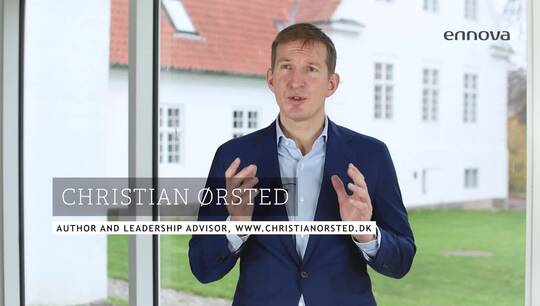
When HR professionals have to support the organisation after COVID-19, this can be done on several different levels. One of the points I make is that HR can help the organization substantially at a strategic level by looking at the general decisions that need to be made or that have been made in relation to how you can organize post-corona in a flexible and hybrid reality. One way to be helpful is to examine some of the areas of conflict between being able to make decisions centrally and saying: “As top leadership, we need to decide how this should be organized” Or, in contrast: “We will leave it up to teams – practically all the way down to employee level – to decide how to organize”. You need to position yourself somewhere along this line. At the same time, there is also a conflict between focusing a lot on the individual’s flexibility and then focusing on the need for belonging to an organization, the need to prioritize relations, communities, and that sort of thing – and you have to position yourself somewhere. So if you want to be helpful, from an HR perspective, then you can help your top leadership by balancing some of these somewhat conflicting requirements and of course reminding them that you have to make adjustments going forward and that it is not a decision that you only make once and then you’re done; you will have to come back to it on an ongoing basis. This is one of the things which is a good, useful tool. Then there is a somewhat more specific level where, as an HR professional, you can help teams in the organization by assessing and evaluating the way they are organized and the experiences they acquired. What works well in terms of how you are organized in relation to the task, the relationships in the team, and to a number of parameters? This way, you will also be able to make some smart decisions about the adjustments that you may have to implement and remind them that it is better to make small adjustments than big adjustments and help them to talk about this specifically, so that it becomes a reality. We are in a situation where we can see that organizations have experienced very different things. There are some employees who thought it was absolutely fantastic that they have more flexibility and there are those – actually often the same ones – who ask for a better community and workplace relations. One of the things organizations have to keep in mind is that they do not restrict themselves to one way of organizing, but instead that they adapt and adjust on an ongoing basis and that they discuss matters that might require adjustment – and at the same time they also need to realize that problems may arise that could not have been anticipated. So, being attentive to the things that pop up and the things that do not work and then handling them is in reality a very large part of being successful in this task. After all, none of us have a lot of experience going back years in relation to how to organize in a reality like this one, so we have to figure it out together, and we can best do this by talking about what we experience, what we sense we – what’s working and what doesn’t seem to be working? And when we then encounter the problems, how can we begin to solve them and what could our next step be?